

· Planning & launch
Launching high and cutting later feels safe. It isn't. Every price cut tells your early buyers they overpaid, and tells new buyers to wait for the next one.
A price cut rarely brings the rush developers hope for. Early buyers feel cheated and talk about it. Channel partners start telling clients to wait. And the next price you announce is no longer believed.
The people who booked first become your loudest critics.
If the price fell once, they expect it to fall again.
Future price rises stop creating urgency.
The 3 to 5 projects a buyer would actually visit, and their real closing prices, not their brochure prices.
The total ticket size and EMI that local buyers can get a loan for.
The minimum price that keeps the project healthy, including the cost of selling.
A faster sales plan needs a sharper launch price. A slower one can start higher.
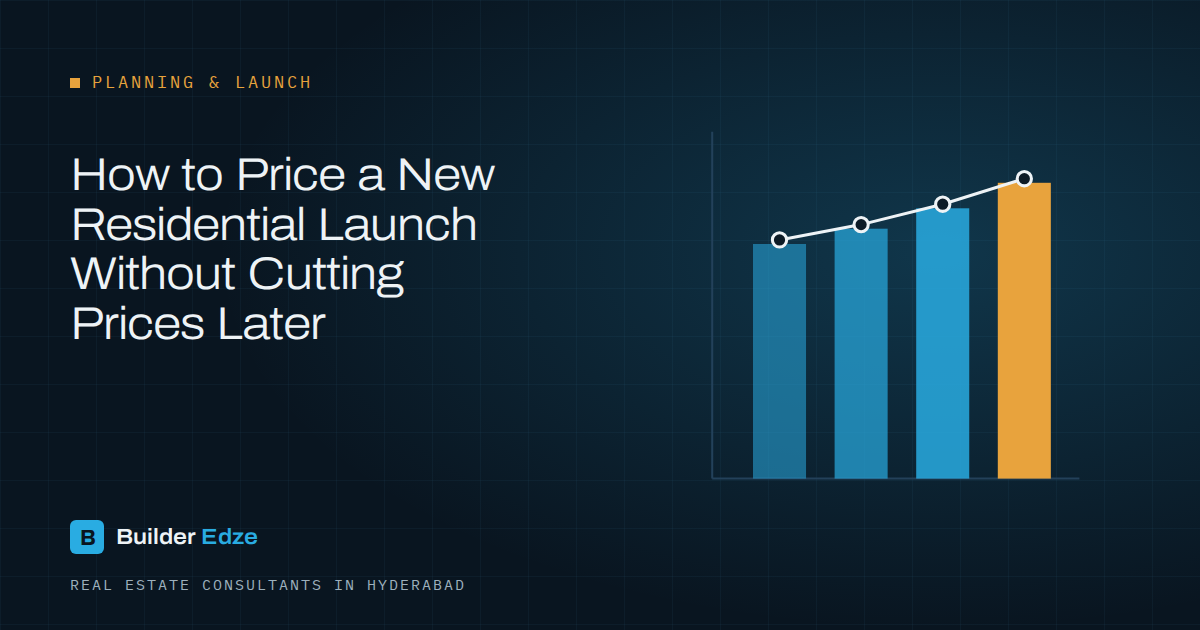
Instead of starting high and discounting, start at a price you can hold and plan small increases at clear milestones. This gives buyers a real reason to book now.
Once a launch price is public, every channel partner and buyer remembers it. That's why we work it out before launch, as part of the Launch Readiness Report: a price you can hold, a plan to step it up, and a clear view of how fast the project can sell at that price.
A pre-launch price can work if it's clearly time-bound and leads into a planned price increase. Open-ended pre-launch offers usually turn into discounts.
Tie increases to visible milestones, such as a share of flats sold or a slab being completed, so buyers can see why the price moved.
First check the sales process: enquiries, site visits and follow-up. Slow sales are often a sales problem, not a price problem.
Before your architect finalises the plan, find out who will buy, what they'll pay for and how fast the project can sell.

